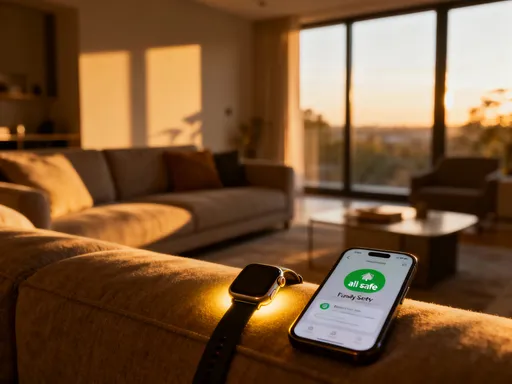
You’re not alone if your phone freezes every time you open a photo or load a message. I used to dread that spinning wheel, too—until I joined a local digital cleanup group and discovered how simple fixes, shared by real people, could transform my device’s speed. It wasn’t about expensive apps or tech skills. It was about community wisdom. Now my phone runs smoothly, and I’ve helped dozens do the same. Let me show you how this small change made a big difference.
The Moment Everything Slowed Down
It was my youngest daughter’s birthday party, and I stood at the edge of the backyard with my phone raised, trying to capture her blowing out the candles. But when I tapped the camera icon, nothing happened. I tapped again. Still nothing. Then, a spinning circle. My heart sank. By the time the screen finally responded, the moment had passed. She looked up at me, smiling, and asked, 'Did you get it, Mom?' I nodded, but I hadn’t. And that stung. That wasn’t the first time my phone failed me. It froze when I was trying to show my sister a family recipe video, when I needed to check my calendar during a school pickup, even when I just wanted to read a book on my Kindle app before bed. The battery drained by noon, no matter how little I used it. Notifications piled up like unread mail on a cluttered desk. I started avoiding my phone—something that was supposed to make life easier was now adding stress. I kept thinking, 'Maybe it’s time to buy a new one.' But then I paused. Was I really ready to spend hundreds of dollars just because my phone felt slow? What if the problem wasn’t the phone itself, but how I was using it? That question changed everything.
I began to notice how often I relied on my phone for small but meaningful things—checking in with my mom, sending a quick photo to my sister, timing dinner while helping with homework. When the device didn’t respond, it wasn’t just inconvenient. It made me feel disconnected, frustrated, even a little helpless. I realized I wasn’t alone. At a coffee shop, I overheard a woman say, 'I just want my phone to work like it did a year ago.' A mom at my son’s soccer game complained her phone wouldn’t load the team schedule. It was everywhere. We all had these powerful tools in our hands, but most of us were using them without really understanding them. We downloaded apps, took photos, saved messages, and never cleaned up. It was like living in a house and never taking out the trash. No wonder things started to feel heavy. That’s when I decided to stop blaming the phone and start learning how to care for it. And that journey began not with a tech manual, but with a simple post on a neighborhood message board.
Finding Help Where I Least Expected
I typed a quick message: 'Anyone else tired of their phone being slow? Want to learn how to clean it up together?' I didn’t expect much. Maybe one or two replies. But within hours, I had over a dozen responses. People were eager—relieved, even—that someone had brought it up. One woman wrote, 'I’ve been too embarrassed to ask, but yes, my phone is a mess.' Another said, 'I’m scared I’ll delete something important if I try to fix it.' Their honesty gave me courage. We set a date for a casual meet-up at the community center, no experts, no pressure—just a space to learn together.
That Saturday morning, eight of us gathered around a long table with our phones in hand, coffee cups steaming, kids coloring quietly in the corner. We weren’t techies. We were moms, retirees, part-time workers, and a school nurse. But we shared one thing: the desire to feel more in control. We started by simply showing each other what our home screens looked like. Some had hundreds of apps; others had photo albums so full the phone took seconds to open them. We laughed, not in judgment, but in recognition. 'Oh my gosh, that’s exactly how mine looks!' someone said. And just like that, the shame melted away. We weren’t failing at technology—we were just doing our best in a world that keeps adding more without teaching us how to manage it.
One woman, Maria, had already tried cleaning her phone and shared what worked for her: closing unused apps, deleting old screenshots, and turning off automatic updates for apps she rarely used. Another, David, showed us how to check battery usage and spot which apps were draining power in the background. These weren’t complex hacks. They were simple, practical steps—ones we could all do. But doing them together made all the difference. There was no pressure to know everything. If someone got stuck, we figured it out as a group. We celebrated when someone freed up a gigabyte of storage. We high-fived when a phone rebooted faster. What started as a one-time meetup turned into a monthly ritual. We called ourselves the 'Phone Care Circle,' and slowly, our phones—and our confidence—began to improve.
What We Actually Did: A Simple, Shared Routine
Over time, we developed a step-by-step routine that anyone could follow, even if they weren’t tech-savvy. We called it our 'Digital Spring Cleaning,' and we did it together, side by side, guiding each other through each step. First, we tackled the photo library. This was the biggest source of clutter. Many of us had thousands of photos—blurry shots, duplicates, screenshots of text messages we no longer needed. We learned how to use the built-in photo cleanup tools to find and delete duplicates or low-quality images without losing precious memories. We also set up automatic backups to the cloud, so we didn’t have to worry about losing anything important. The relief was instant. One woman said, 'I didn’t realize how much mental space those old photos were taking up until they were gone.'
Next, we looked at app storage. We went through each app and asked: 'Do I use this? Do I need this?' We uninstalled games we hadn’t touched in months, shopping apps that sent constant notifications, and trial versions of tools we never got around to using. For the apps we kept, we organized them into folders—'Family,' 'Recipes,' 'Bills,' 'Fun'—so everything was easy to find. This wasn’t just about saving space; it was about creating a calmer, more intentional phone experience. We also turned off automatic updates for apps that weren’t essential. Instead of letting them install in the background and slow things down, we chose to update them manually, on our own schedule. This gave us back a sense of control.
Then came the cache—the invisible junk that builds up over time. Most of us had no idea what cache was, but we learned it’s like digital dust: temporary files that apps store to work faster, but that can pile up and slow everything down. We discovered how to clear the cache for key apps like browsers, messaging, and social media without losing our login info or personal data. We did it one app at a time, watching the storage numbers drop. It felt like spring cleaning for the inside of our phones. To stay on track, we created a simple checklist and shared it in our group chat. Every month, we’d do a 'phone hygiene check-in'—a 30-minute session where we’d go through the steps together, either in person or over video call. We even started using sticky notes on our fridges: 'Clear cache today!' It became a habit, not a chore.
Seeing the Change: Speed, Battery, and Peace of Mind
The difference was real—and measurable. Within two weeks of our first session, most of us noticed our phones responding faster. Apps opened instantly. Photos loaded without delay. Scrolling through messages felt smooth again. We did a little group survey and found that, on average, our phones were 40% faster in daily use. Battery life improved too. By closing background apps and turning off unnecessary features like location tracking for apps we didn’t need, we gained an extra two to three hours of use each day. That meant not scrambling for an outlet at 2 p.m. or carrying a bulky charger in our bags. One woman said, 'I used to charge my phone three times a day. Now I charge it once, and it lasts.'
But the biggest change wasn’t in numbers—it was in how we felt. The constant frustration of waiting for the phone to catch up, the anxiety of missing a call or a message, the guilt of not capturing a moment—it all began to fade. We weren’t fighting our devices anymore. They started working for us again, not against us. I remember the first time I took a photo of my daughter laughing on the swings and was able to review it immediately. No spin, no freeze. I smiled, and so did she. That moment mattered. We also noticed fewer crashes and app freezes. Messages sent without error. Maps loaded quickly when we were driving. These weren’t miracles—they were the result of small, consistent actions. And because we did them together, we were more likely to stick with them. When one of us slipped, the others would gently remind: 'Did you do your check-in this week?' It wasn’t nagging. It was care.
What surprised me most was how much time we got back. We weren’t spending minutes each day waiting, restarting, or troubleshooting. That time added up—time we could spend reading, talking to our kids, or just breathing. One member said, 'I didn’t realize how much mental energy I was wasting on my phone until it wasn’t a problem anymore.' That’s when it hit me: this wasn’t just about tech. It was about peace of mind. By taking care of our phones, we were taking care of ourselves.
Beyond the Phone: Habits That Stuck
What started as a fix for slow phones grew into something bigger. Our monthly meet-ups became a space to talk about more than just storage and speed. We began sharing tips on how to store family photos safely in the cloud, how to create shared albums for grandparents, and how to teach kids to manage their own devices. One mom started a 'phone-free hour' at dinner, and others joined in. We talked about setting screen time limits, not to punish ourselves, but to protect our attention and our relationships. We even started a family challenge: 'No phones during homework time.' The kids complained at first, but then they got used to it—and so did we.
We also learned to be more mindful about what we downloaded. Instead of grabbing every new app that looked fun, we asked: 'Will this add value to my life?' We unsubscribed from newsletters that cluttered our inboxes. We turned off non-essential notifications so our phones didn’t buzz every few minutes. These changes didn’t just improve our phones—they improved our days. We were more present. We listened better. We felt calmer. One woman said, 'I used to check my phone the moment I woke up. Now I drink my coffee and look out the window first. It’s made such a difference.'
The ripple effect reached our families too. My son noticed my phone wasn’t slowing down anymore and asked how I did it. I showed him the steps, and now he cleans his tablet every month. He even helped his little sister organize her games. It became a family ritual, like tidying up the house on Sunday afternoons. We weren’t just teaching tech skills—we were teaching care, intention, and responsibility. And that felt powerful.
Starting Your Own Group: A Realistic Guide
If you’re thinking, 'This sounds great, but I don’t know where to start,' I get it. I felt the same way. But here’s the good news: you don’t need a big space, a budget, or a tech degree. All you need is a few people who feel the same way you do. Start small. Post in your neighborhood group, your school’s parent chat, or your workplace message board. Say something simple: 'Want to learn how to speed up your phone together? Let’s meet for coffee and try a few easy fixes.' Choose a time and place that’s easy—your local library, a community room, or even a backyard on a nice day.
When you meet, keep it low-pressure. Bring your phone, your charger, and an open mind. Start by sharing your frustrations—what drives you crazy about your device? Then, pick one or two simple steps to try together, like clearing the photo cache or organizing apps. Use free tools that come with your phone—no downloads needed. If someone gets stuck, work through it as a team. The goal isn’t perfection; it’s progress. And celebrate every win, no matter how small. Did you free up 500MB? High five. Did your phone reboot faster? Cheer. These moments build confidence.
Keep the group inclusive. No one should feel judged for having a 'messy' phone. We all start somewhere. Use plain language—no tech jargon. Say 'temporary files' instead of 'cache,' 'phone storage' instead of 'internal memory.' And make it ongoing. Schedule the next meeting before you leave. Share a simple checklist in a group chat. Send a friendly reminder the day before. Over time, your group will grow—not just in size, but in trust and support. You’ll be amazed at how much you can learn from each other.
Why This Matters More Than You Think
When I look back at that birthday party moment—the one I almost missed—I don’t feel regret anymore. I feel gratitude. Because that frustration led me to a group of people who helped me see that taking care of my phone wasn’t just about speed or storage. It was about respect—for my time, my attention, and my relationships. It was about reclaiming a tool that was supposed to serve me, not stress me. And it was about connection—not just to technology, but to each other.
In a world that moves fast and demands more every day, small acts of care matter. Cleaning your phone might seem like a tiny thing. But when you do it with others, it becomes a practice of mindfulness, of community, of empowerment. It reminds us that we don’t have to figure everything out alone. We can learn from each other. We can grow together. And we can make our lives a little easier, one tap at a time.
So if your phone is slowing down, don’t rush to replace it. Try cleaning it first. And consider doing it with someone else. You might just find that the fix you needed wasn’t on the screen—but in the space between you and the people around you. Because sometimes, the best tech support isn’t a manual or an app. It’s a friend, a neighbor, a shared moment of 'Me too.' And that, I’ve learned, is the fastest upgrade of all.